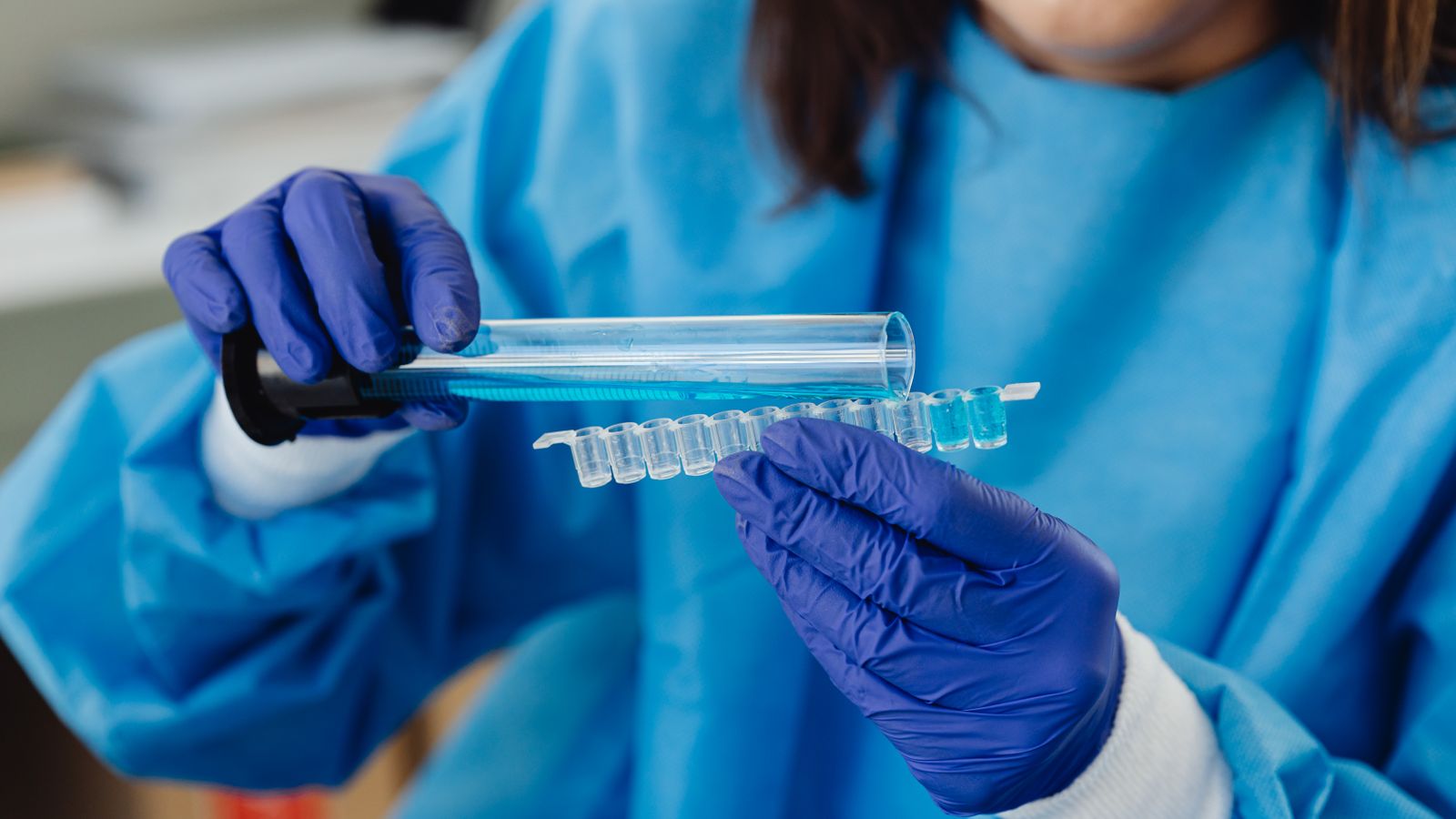
bacteriostatic-water
What Concentration of Benzyl Alcohol Is in Bacteriostatic Water
A look at the standard benzyl alcohol concentration in bacteriostatic water, how it appears on labels and COAs, and how to convert the percentage to mg per vial.
Medically reviewed by Natalia Sorokin, PhD, research scientist and biochemist — Last reviewed
Natalia Sorokin, PhD holds a doctorate in biochemistry from Moscow State University and postdoctoral training at the Scripps Research Institute, with over 18 years in synthetic peptide chemistry and pharmaceutical-grade peptide production.
The concentration of benzyl alcohol in bacteriostatic water is almost always listed as 0.9% weight-per-volume, which works out to 9 mg of benzyl alcohol per milliliter of water. This figure comes from the USP monograph for Bacteriostatic Water for Injection, and it is the reason the product is labeled “bacteriostatic” rather than simply “sterile water.” The benzyl alcohol is added as a preservative, not as an active ingredient, and its concentration is fixed by the compendial standard rather than chosen by an individual manufacturer.
Where the 0.9% Figure Comes From
Bacteriostatic water is sterile water for injection with a small, standardized amount of benzyl alcohol added. The USP specification calls for 0.9% benzyl alcohol, and manufacturers that label their product as USP-grade bacteriostatic water are formulating to that number. This is different from plain sterile water, which contains no preservative at all and is meant for single use only, since nothing in it inhibits bacterial growth once the vial is punctured.
A listing that describes its water as “bacteriostatic” without stating a benzyl alcohol percentage has left out a detail that belongs on the label. A complete listing states the concentration explicitly, usually in the same line as the USP designation, so a buyer can confirm the product matches the compendial standard rather than an unspecified in-house formulation.
Reading the Concentration on a Label or COA
When a certificate of analysis is available, the benzyl alcohol concentration should appear as a tested or verified value, not just a restatement of what the label claims. A COA that lists benzyl alcohol content as “0.9% w/v” alongside a test method and a reference range is showing more than a label that simply prints the number. The distinction matters because the concentration of benzyl alcohol is in bacteriostatic water by formulation, but formulation and verified testing are not the same thing — one is a recipe, the other is a measurement of what actually ended up in the vial.
Sterility testing and endotoxin testing are usually listed separately from the benzyl alcohol assay on a thorough COA. A listing that only shows one of these three checks is giving a partial picture of the vial’s quality documentation.
Converting the Percentage to Milligrams Per Vial
Because 0.9% w/v means 0.9 grams per 100 mL, the per-milliliter figure is straightforward to calculate: divide 0.9 grams by 100 mL, which gives 0.009 grams per mL, or 9 mg per mL. From there, the total benzyl alcohol in any given vial size is just that per-mL figure multiplied by the vial’s stated volume.
| Vial size | Benzyl alcohol concentration | Total benzyl alcohol in vial |
|---|---|---|
| 3 mL | 9 mg/mL | 27 mg |
| 10 mL | 9 mg/mL | 90 mg |
| 20 mL | 9 mg/mL | 180 mg |
| 30 mL | 9 mg/mL | 270 mg |
Each row uses the same multiplication: 9 mg/mL times the vial volume in mL. A 10 mL vial contains 9 × 10 = 90 mg of benzyl alcohol in total, and a 30 mL vial contains 9 × 30 = 270 mg. The concentration itself does not change with vial size — only the total quantity of benzyl alcohol present in the container changes, because a larger vial simply holds more of the same 0.9% solution.
Why This Is Different From Peptide Concentration After Reconstitution
It is easy to conflate the benzyl alcohol concentration in the water itself with the concentration of a peptide after that water is used to reconstitute a lyophilized vial. These are two separate figures. The benzyl alcohol concentration stays at 0.9% regardless of what is being reconstituted, because it is a property of the water, not of the peptide. The peptide concentration after reconstitution, by contrast, depends entirely on how many milligrams of peptide were in the vial and how many milliliters of bacteriostatic water were added to it — a completely separate calculation from the benzyl alcohol figure above.
Listings sometimes describe a product simply as “bacteriostatic water, 10 mL” without separating these two ideas, which can leave a reader unsure whether “concentration” refers to the preservative or to something else entirely. A well-written listing keeps the two figures distinct: one is a fixed compendial constant tied to the water, and the other is a calculation the buyer performs after choosing a dilution volume. Readers who want to check dilution math independently can cross-reference a tool like peptcalc.com rather than relying on a single listing’s arithmetic.
What Varies Across Suppliers and Listings
While the benzyl alcohol concentration itself is standardized, listings vary in how completely they document it. Some differences worth checking across sources:
- Whether the benzyl alcohol percentage is stated at all, versus just the word “bacteriostatic.”
- Whether a COA is attached showing a tested value rather than a formulation claim.
- Whether the vial size and total volume are stated clearly enough to calculate the total benzyl alcohol content, as shown in the table above.
- Whether the listing distinguishes bacteriostatic water from sterile water for injection, which contains no preservative.
Buyers comparing multiple sourcing options sometimes also compare pricing across listings before evaluating specification completeness; peer research-peptide catalogs are used for that kind of cross-supplier price comparison, separate from the documentation quality question addressed here. For a documentation reference on this specific product, the specification sheet at heezresearch.com/product/bacteriostatic-water/ lists the benzyl alcohol percentage alongside the other testing details described above, which is a useful pattern to look for when evaluating any bacteriostatic water listing.
Summary
The concentration of benzyl alcohol in bacteriostatic water is set by the USP standard at 0.9% w/v, or 9 mg per mL, regardless of the vial size a supplier offers. That figure is fixed by the compendial formulation, while the total milligrams of benzyl alcohol in a given vial scales with volume, and the peptide concentration after reconstitution is a separate calculation entirely. A complete listing states the benzyl alcohol percentage explicitly and backs it with COA data rather than a label claim alone, which gives a buyer a way to verify the product matches the standard rather than an unspecified formulation.