reconstitution
What Solvent Options Exist Besides Bacteriostatic Water
A look at the solvents research suppliers list alongside bacteriostatic water, how each is described on a COA, and why vial concentration math stays the same across all of them.
Medically reviewed by Natalia Sorokin, PhD, research scientist and biochemist — Last reviewed
Natalia Sorokin, PhD holds a doctorate in biochemistry from Moscow State University and postdoctoral training at the Scripps Research Institute, with over 18 years in synthetic peptide chemistry and pharmaceutical-grade peptide production.
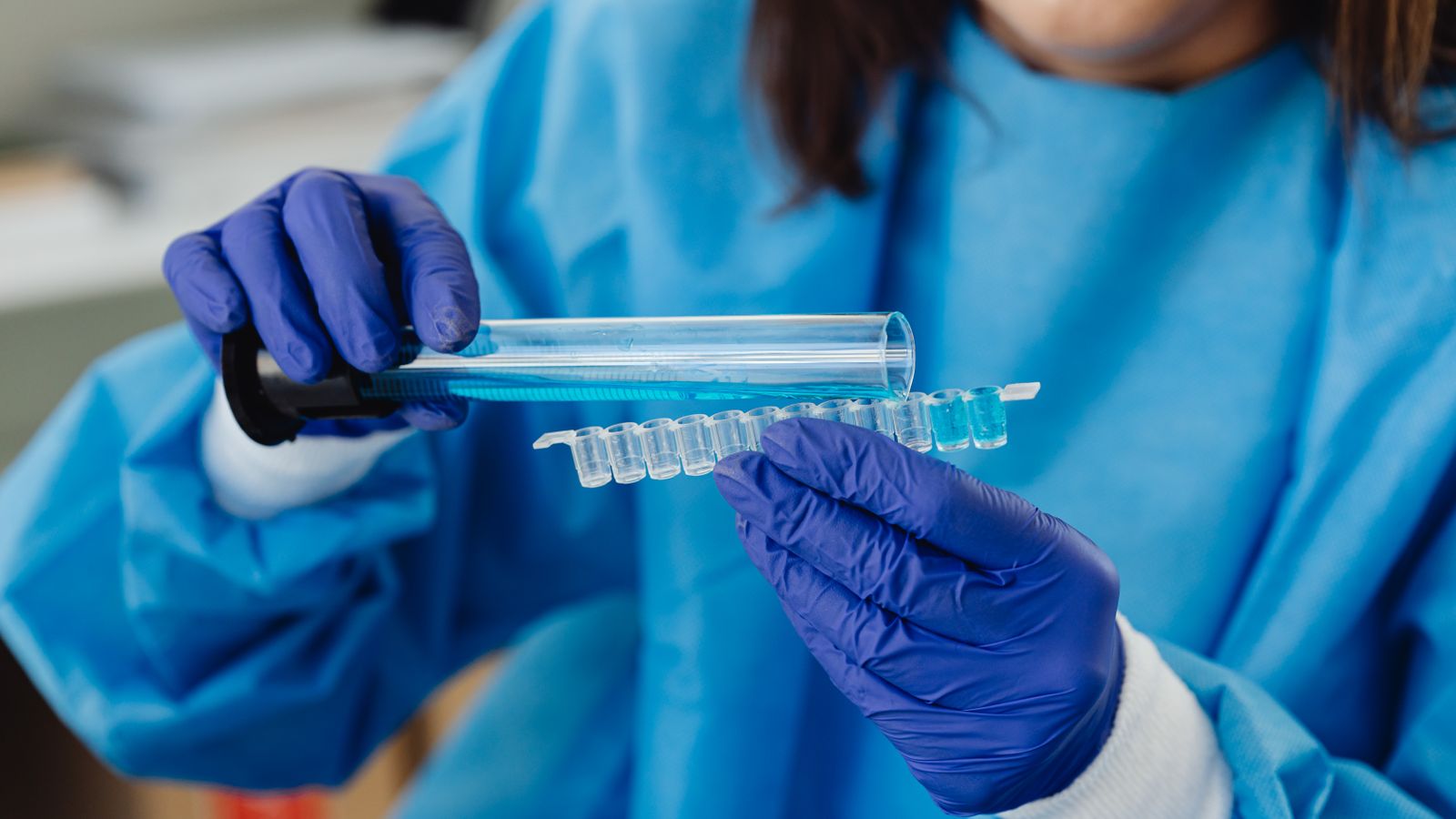
The solvent options besides bacteriostatic water that show up most often in peptide listings are sterile water for injection, dilute acetic acid solutions, and occasionally saline. Each is tied to different solubility behavior and different shelf-life claims once a lyophilized peptide is put into solution for peptide reconstitution, and a listing’s choice of solvent usually reflects the specific peptide’s chemistry rather than a generic default.
Why the solvent choice varies by peptide
Not every lyophilized peptide dissolves cleanly in plain water. Some sequences are more soluble in a mildly acidic solution, which is why a small number of listings specify dilute acetic acid rather than bacteriostatic water as the recommended diluent for that particular product. Others are sensitive to the preservative used in bacteriostatic formulations and are instead paired with sterile water for injection, which contains no preservative at all. A supplier’s product page or included insert is the place this is documented — the peptide’s chemical properties, not personal preference, determine which solvent a listing calls for.
Sterile water for injection
Sterile water for injection (often abbreviated SWFI) is water that has been sterilized and packaged without any added preservative. Listings that pair a peptide with SWFI typically note a shorter recommended window for the reconstituted solution compared to bacteriostatic water, since there is no benzyl alcohol or similar agent to inhibit microbial growth once the vial has been entered. Some suppliers frame SWFI as the more chemically neutral option, since it introduces nothing beyond water molecules into the solution.
Bacteriostatic water and what the label means
Bacteriostatic water is sterile water with a small percentage of benzyl alcohol added as a preservative, generally around 0.9%. That preservative is what allows a multi-dose vial to be entered repeatedly over a longer window without the same growth risk associated with preservative-free water. Listings that specify bacteriostatic water as the recommended diluent are describing this preservative content, not a difference in the water itself.
Acetic acid solutions for select peptides
A subset of peptides, most notably some with lower aqueous solubility, are documented as requiring a dilute acetic acid solution rather than plain or bacteriostatic water. This is a solubility consideration tied to the peptide’s chemistry — the acidic environment helps keep the peptide in solution rather than allowing it to precipitate. Suppliers that stock these peptides will usually flag the recommended solvent directly on the product listing or in an accompanying technical sheet, since using the wrong diluent for this category can leave visible particulate in the vial.
Saline and other diluents
Saline (sodium chloride solution) appears far less often in peptide listings than the three solvents above, and its use is peptide-specific rather than a general substitute for bacteriostatic water. When a listing does reference saline, it is worth checking whether the concentration and sterility grade are specified, since “saline” alone is not a complete description of a research-grade diluent.
Storage notes tied to solvent choice
Listings and inserts often pair the named solvent with a storage note, since the two are related. A vial reconstituted with bacteriostatic water is commonly documented with a longer refrigerated window than the same peptide reconstituted with sterile water for injection, because the benzyl alcohol preservative in bacteriostatic water is what extends that window in the first place. Preservative-free solvents such as SWFI or saline are more often documented with a shorter recommended window and sometimes a note to use the solution promptly rather than store it across multiple sessions. Acetic acid solutions carry their own storage notes tied to pH stability rather than microbial growth, since the acidic environment that keeps the peptide dissolved is a separate consideration from preservation. None of these storage windows are guaranteed by the solvent alone — they are specific to how a given supplier validated that particular peptide, which is another reason the listing itself, rather than a general rule of thumb, is the reference point worth checking.
Comparing the common solvent options
| Solvent | Preservative present | Typical use case noted in listings |
|---|---|---|
| Bacteriostatic water | Yes (benzyl alcohol, ~0.9%) | Most general-purpose peptide listings |
| Sterile water for injection | No | Preservative-sensitive formulations, single-use framing |
| Dilute acetic acid solution | No | Peptides with lower solubility in plain water |
| Saline | No (isotonic saline) | Peptide-specific, less common in listings |
Concentration math does not change with the solvent
Whichever diluent a listing specifies, the arithmetic used to describe vial concentration is the same: concentration equals the peptide mass in the vial divided by the milliliters of diluent added. A 5 mg vial reconstituted with 2 mL of diluent works out to 2.5 mg/mL (5 mg ÷ 2 mL = 2.5 mg/mL), and that figure is 2,500 mcg/mL once converted, since 1 mg equals 1,000 mcg (2.5 mg/mL × 1,000 mcg/mg = 2,500 mcg/mL). On a U-100 insulin syringe, where 1 mL corresponds to 100 marked units, that same 2.5 mg/mL solution places 25 mcg in each unit drawn (2,500 mcg ÷ 100 units = 25 mcg/unit). None of that calculation depends on whether the diluent used was bacteriostatic water, sterile water, or an acetic acid solution — the math is driven entirely by peptide mass and diluent volume. Readers who want to check these figures independently can cross-reference the math with a tool like peptcalc.com rather than relying on a single source.
Reading a listing for solvent information
A complete listing states which solvent the peptide was validated against, along with the vial’s peptide mass and any COA reference for purity. Listings that omit the recommended solvent entirely, or that describe “water” without specifying sterility or preservative content, leave a gap that makes it harder to compare one source’s documentation against another’s. This is part of why researchers sourcing bacteriostatic-water listing from a supplier with independent lab documentation, since the diluent’s own purity and packaging record is as relevant to the listing as the peptide’s. For a broader look at how other network sites break down sourcing questions, see peer research-peptide catalogs, and for pricing-side comparisons across suppliers, cover that angle in more depth.
Summary
Bacteriostatic water is the default diluent in most peptide listings, but sterile water for injection, dilute acetic acid, and occasionally saline appear where a peptide’s solubility or preservative sensitivity calls for something different. The solvent listed should match what the supplier documents for that specific peptide, and regardless of which diluent is used, concentration figures are calculated the same way from vial mass and diluent volume.